
Understanding Interest Rates and their affect on Real Estate Portfolios Values
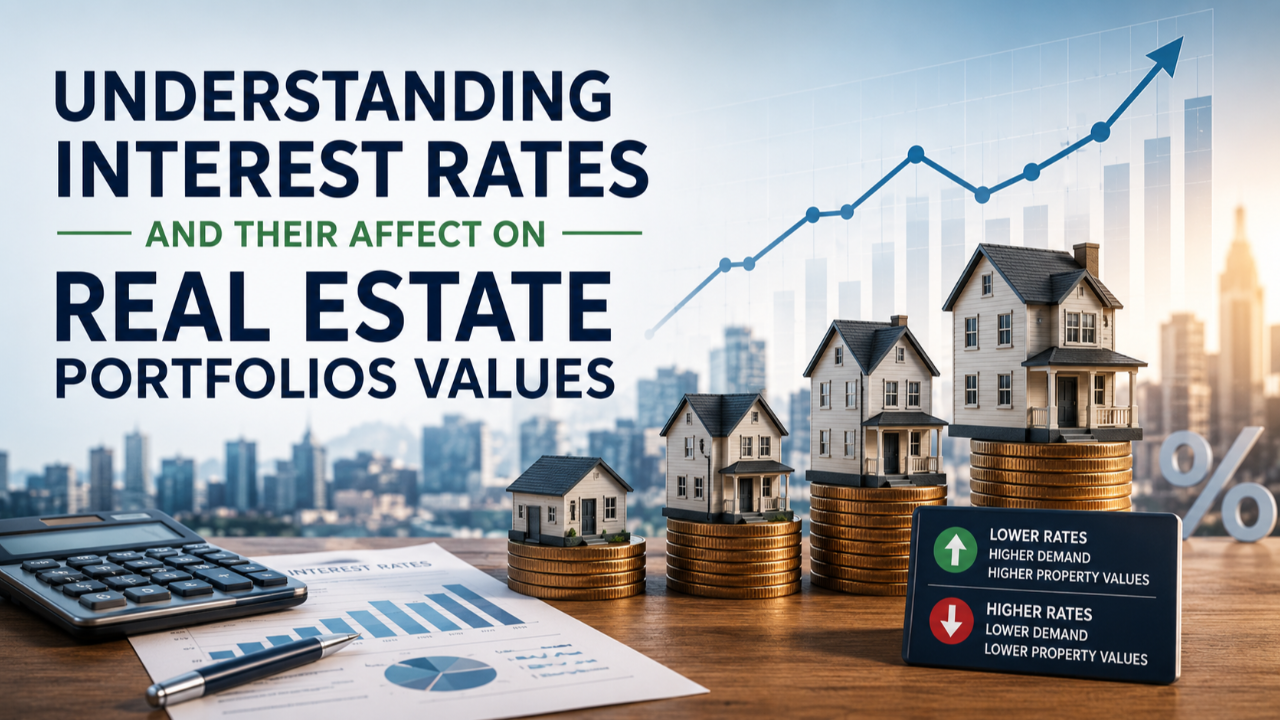
Interest rates are one of the most powerful forces shaping financial markets, and their influence on real estate portfolios is both direct and profound. This article highlights how interest rates are determined, why they fluctuate, and how they ripple through asset values, especially real estate.
What Are Interest Rates and Why Do They Matter?
Interest rates represent the cost of borrowing money and the return on lending capital. They are influenced by central banks, inflation expectations, government borrowing, and global economic conditions. The article emphasizes that current and forecasted interest rates are among the most important factors influencing market pricing across all asset classes.
At a structural level, interest rates vary across different durations:
- Short-term (overnight rates): Set by central banks and influence consumer lending (e.g., mortgages, lines of credit).
- Medium-term (1–5 years): Drive mortgage rates and business borrowing costs.
- Long-term (10+ years): Affect large-scale financing, pension investments, and real estate development funding.
This “term structure” of interest rates is known as the yield curve, and it plays a central role in real estate valuation.
The Yield Curve and Real Estate Valuation
The yield curve reflects borrowing costs across different time horizons. Typically, longer-term rates are higher due to inflation and risk expectations.
For real estate investors:
- Long-term bond yields (e.g., 10-year rates) are particularly critical because they underpin:
- Commercial property financing
- Discount rates used in valuation models
- Capitalization (cap) rates
When long-term yields rise, investors demand higher returns from real estate, which puts downward pressure on property values.
Key Drivers of Interest Rate Movements
The report identifies several structural forces pushing interest rates higher:
- Inflation
- U.S. inflation is (~3.8–3.9% and rising).
- Persistent inflation forces central banks to maintain or increase interest rates.
- Government Debt
- Rising global government borrowing increases the supply of bonds, pushing yields higher.
- For example, U.S. debt servicing costs are approaching 19% of federal revenue, highlighting the scale of fiscal pressure.
- Geopolitics and Structural Shifts
- De-globalization, tariffs, and geopolitical tensions increase production costs and inflation.
- These dynamics contribute to structurally higher interest rates over time.
Direct Impact of Interest Rates on Real Estate Portfolios
- Property Valuations (Cap Rates)
Real estate is valued using income-based approaches, where:
- Rising interest rates → higher cap rates
- Higher cap rates → lower property valuations
Even small increases in rates can significantly reduce property values, especially for highly leveraged portfolios.
- Cost of Financing
Interest rates directly influence borrowing costs:
- Higher rates → higher mortgage payments
- Reduced cash flow and investment returns
- Lower ability to refinance or expand portfolios
This is especially critical for commercial real estate investors relying on debt.
- Investor Demand and Capital Flows
When interest rates rise:
- Bonds become more attractive relative to real estate
- Investors require higher returns (risk premiums)
- Real estate demand softens, impacting pricing
The report notes that interest rate volatility has reduced the traditional stabilizing role of bonds, shifting investor behavior across asset classes.
- Development Activity
Higher rates also impact new supply:
- Increased financing costs delay or cancel development projects
- Fewer new projects can eventually constrain supply
- This may support long-term rental income growth, but with a lag
Indirect Effects on Real Estate Performance
- Tenant Affordability
- Higher borrowing costs and inflation reduce consumer spending power
- Businesses face higher operating costs
- This can lead to weaker demand for retail, office, or residential space
- Economic Growth
- Elevated interest rates slow economic activity
- Reduced GDP growth can weaken occupancy rates and rental growth
Changing Market Dynamics: A New Environment
Historically, bonds provided diversification—rising when equities fell. However, the report highlights a shift:
- Both equities and bonds have declined together during recent inflationary periods
- Interest rate volatility is now a defining feature of markets
- Traditional portfolio construction (e.g., 60/40) is becoming less reliable For real estate investors, this means:
- Greater sensitivity to macroeconomic trends
- Increased importance of asset selection and active management
- Strategic Implications for Real Estate Investors
Given this environment, investors should consider:
- Focus on Quality Assets
- Properties with strong cash flows and resilient tenants
- Manage Leverage Carefully
- Avoid excessive reliance on variable-rate debt
- Stress-Test Portfolios
- Assess performance under higher interest rate scenarios
- Monitor Inflation Trends
- Real estate can hedge inflation, but only if rental growth keeps pace
- Diversify Strategically
- Geographic and sector diversification reduces risk exposure
Conclusion
Interest rates are a foundational driver of real estate portfolio performance. As highlighted in the report, rising inflation, increased government debt, and geopolitical shifts are likely to sustain higher interest rates and volatility in the years ahead.
For real estate investors, this environment presents both challenges and opportunities. While higher rates can pressure valuations and financing, disciplined portfolio management and strategic asset selection can help preserve and grow value over the long term.
__________________________________________________________

Dan Dobry
Vice President PWFO

